Currently Empty: ₹0.00
Neem and Tulsi Soap: Benefits, Uses, Ingredients, Side Effects & How to Use
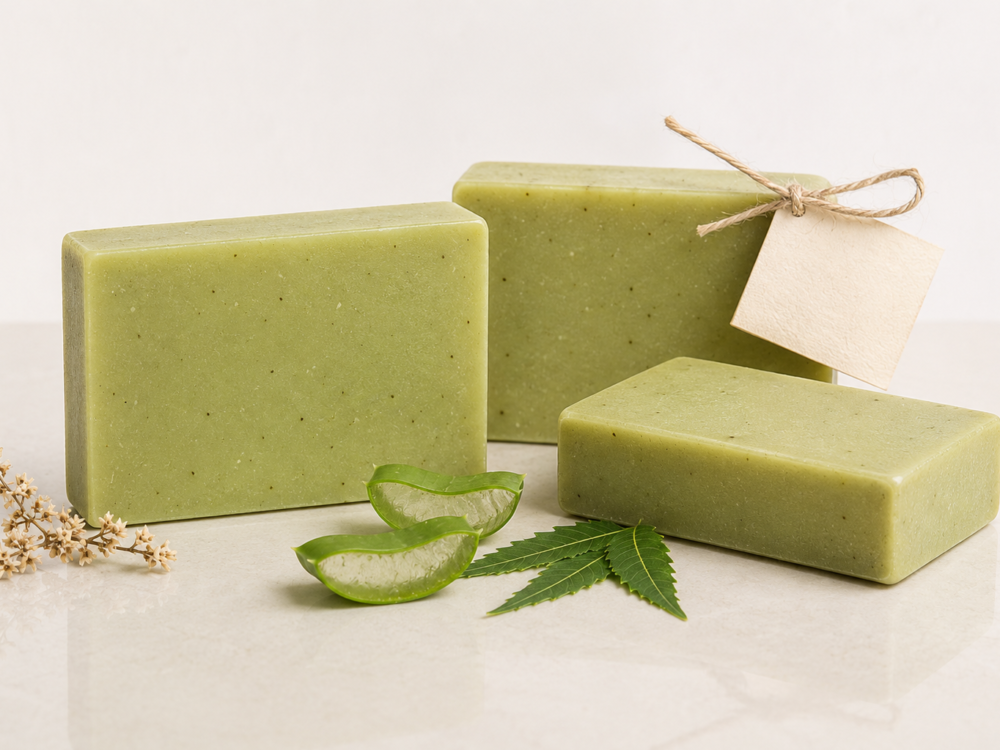
Neem and Tulsi soap is a popular herbal skincare choice for people who prefer traditional Indian ingredients in their daily cleansing routine. Made with ingredients derived from Neem (Azadirachta indica) and Tulsi (Ocimum tenuiflorum), this type of soap is commonly used to cleanse the skin, remove excess oil and leave the skin feeling fresh.
Neem has a long history of traditional topical use and has been studied for antimicrobial, anti-inflammatory and antioxidant properties. Tulsi has also been investigated for antimicrobial and antioxidant activity.
But is Neem and Tulsi soap actually good for your skin? What are its benefits, who should use it, and can it help with acne or oily skin?
Let’s take a closer look.
What Is Neem and Tulsi Soap?
Neem and Tulsi soap is a cleansing soap formulated with Neem and Tulsi extracts, powders or other botanical ingredients.
Neem is obtained from the Neem tree, scientifically known as Azadirachta indica. Tulsi, also called Holy Basil, is generally associated with Ocimum tenuiflorum or Ocimum sanctum.
Both plants have a long history in traditional Indian wellness practices.
Modern research has also investigated their biological properties. Reviews of Neem literature report antimicrobial, anti-inflammatory and antioxidant activities, while research on Tulsi has identified various antimicrobial and antioxidant properties.
However, the performance of a soap depends on its complete formulation, not simply the presence of Neem and Tulsi.
Neem and Tulsi Soap Benefits
1. Helps Cleanse the Skin
The primary purpose of any soap is cleansing.
Neem and Tulsi soap can help remove:
- Dirt
- Sweat
- Excess surface oil
- Everyday impurities
- Residue from skincare products
Regular cleansing can help the skin feel fresh and comfortable.
The exact cleansing effect depends on the soap base and other ingredients used in the formulation.
2. Contains Traditionally Used Herbal Ingredients
Neem and Tulsi have been used traditionally in Indian skincare and personal-care practices for generations.
Neem has attracted scientific interest because of its diverse phytochemicals and reported antimicrobial and anti-inflammatory activities.
Tulsi has similarly been investigated for antimicrobial and antioxidant activity.
This makes the combination particularly appealing to people looking for a herbal soap for everyday cleansing.
3. May Help Remove Excess Oil
Neem and Tulsi soap can be useful for people who prefer a cleansing product that removes excess surface oil.
This can be especially appealing for people with oily or combination skin.
However, removing all oil from the skin is not the goal. Excessively strong cleansing can leave skin dry or uncomfortable.
A good soap should leave your skin feeling clean rather than excessively tight.
4. Can Leave Skin Feeling Fresh
Sweat, pollution, oil and dirt can accumulate on the skin throughout the day.
A Neem and Tulsi soap can provide a refreshing cleansing experience after bathing, exercising or spending time outdoors.
The natural fragrance of Tulsi and other botanical ingredients may also contribute to the overall sensory experience, depending on the formulation.
5. Neem Provides Antimicrobial Properties
One of the reasons Neem is widely studied in skincare is its antimicrobial activity.
Scientific reviews have reported antibacterial, antifungal and other biological activities associated with Neem compounds.
This does not mean that Neem soap should be considered an antibiotic or a treatment for a skin infection.
Rather, Neem can be an interesting botanical ingredient in a cleansing product.
6. Tulsi Has Antimicrobial Potential
Tulsi has also been investigated for antimicrobial activity.
A systematic review of Ocimum sanctum studies found evidence of anticandidal activity in laboratory studies, although the authors noted that further research and clinical trials are needed.
This helps explain why Tulsi is frequently incorporated into traditional herbal personal-care formulations.
7. May Be Suitable for Oily and Combination Skin
People with oily or combination skin often prefer cleansers that provide a thorough cleansing feel without leaving heavy residue.
Neem and Tulsi soap may be suitable for this purpose, depending on the formulation.
If your skin becomes tight, flaky or irritated after washing, the product may be too cleansing for your skin type.
8. Supports a Simple Herbal Skincare Routine
A complicated skincare routine isn’t necessary for everyone.
A simple routine can include:
- Gentle cleansing
- Moisturising
- Sun protection during the day
A properly formulated Neem and Tulsi soap can be incorporated into the cleansing step.
9. Useful for Everyday Bathing
Neem and Tulsi soaps are commonly positioned as herbal bath soaps rather than specialised medical products.
They can be used as part of everyday bathing when the formulation is appropriate for your skin.
Always follow the instructions supplied with the particular product.
10. Combines Two Popular Indian Botanicals
The combination of Neem and Tulsi is one of the reasons this type of soap is popular among consumers looking for traditional Indian ingredients.
Neem contributes its well-studied botanical properties, while Tulsi adds another traditionally valued herb with documented antimicrobial potential.
Neem and Tulsi Soap for Oily Skin
If you have oily skin, Neem and Tulsi soap may be an appealing option because it provides a cleansing experience without relying solely on synthetic fragrance or conventional marketing ingredients.
However, oily skin still needs moisture.
Over-cleansing the skin can cause dryness and irritation, so avoid scrubbing aggressively or washing excessively.
Choose a formulation that leaves your skin clean and comfortable.
Is Neem and Tulsi Soap Good for Acne?
This is one of the most common questions about Neem and Tulsi soap.
Neem has antimicrobial and anti-inflammatory properties that have been studied in relation to dermatological applications.
There is also clinical research involving a specific Neem-containing face wash that reported improvement in some participants with mild-to-moderate acne. However, that study evaluated a particular Neem and turmeric face-wash formulation, not Neem and Tulsi soap generally.
Therefore, it would be inaccurate to claim that every Neem and Tulsi soap cures acne.
What it may do
A suitable soap may:
- Remove excess oil
- Clean sweat and surface impurities
- Provide a fresh skin feel
- Fit into a simple cleansing routine
What it should not be claimed to do
Neem and Tulsi soap should not be marketed as a guaranteed cure for:
- Acne
- Eczema
- Psoriasis
- Fungal infections
- Bacterial infections
- Other medical skin conditions
Persistent or severe acne should be evaluated by a qualified dermatologist.
Neem and Tulsi Soap for Pimples
If pimples are associated with oily skin, regular cleansing can help remove excess surface oil and impurities.
However, a soap cannot address every underlying cause of acne.
If you frequently experience pimples, blackheads, painful acne or acne scarring, consider using evidence-based acne treatments recommended by a dermatologist rather than relying solely on herbal soap.
Neem and Tulsi Soap for Body Skin
Neem and Tulsi soap may be particularly convenient as a herbal body soap.
It can be used during bathing to cleanse areas such as:
- Arms
- Legs
- Back
- Chest
- Shoulders
- Hands
People who sweat heavily or live in hot and humid climates may particularly appreciate a refreshing cleansing soap.
Neem and Tulsi Soap for Sensitive Skin
Natural ingredients are not automatically suitable for sensitive skin.
Botanical extracts, essential oils, fragrance and the soap base can all potentially cause irritation in susceptible individuals.
If you have sensitive skin:
- Check the ingredient list carefully.
- Avoid aggressive scrubbing.
- Start with limited use.
- Consider a patch test.
- Stop using the product if irritation occurs.
If your skin is extremely sensitive or you have an existing dermatological condition, ask a dermatologist before introducing a new skincare product.
Neem and Tulsi Soap Ingredients
The exact ingredients vary between manufacturers.
A typical herbal Neem and Tulsi soap may contain some combination of:
- Neem extract or Neem powder
- Tulsi extract or Tulsi powder
- Plant-based oils
- Soap base
- Glycerin
- Natural or cosmetic fragrance
- Botanical extracts
- Colouring ingredients
- Other moisturising ingredients
Always check the product’s actual ingredient list rather than assuming that every Neem and Tulsi soap contains the same ingredients.
The concentration and quality of Neem and Tulsi can also vary significantly between products.
How to Use Neem and Tulsi Soap
Using Neem and Tulsi soap is simple.
Step 1: Wet your skin
Use clean water to wet the skin.
Step 2: Create a gentle lather
Rub the soap between wet hands or apply it gently to the body.
Step 3: Cleanse
Massage the lather gently over the skin.
There is no need for aggressive scrubbing.
Step 4: Rinse
Rinse thoroughly with clean water.
Step 5: Moisturise
If your skin feels dry after bathing, apply an appropriate moisturiser.
For facial use, only use the soap on your face if the manufacturer specifically recommends it for facial skin.
How Often Can You Use Neem and Tulsi Soap?
The ideal frequency depends on your skin type and the specific soap formulation.
For many people, a cleansing soap can be incorporated into their regular bathing routine.
However, if you notice:
- Dryness
- Tightness
- Redness
- Itching
- Burning
- Flaking
reduce use or discontinue the product.
More frequent washing does not necessarily mean healthier skin.
Neem Soap vs Tulsi Soap vs Neem and Tulsi Soap
| Feature | Neem Soap | Tulsi Soap | Neem & Tulsi Soap |
|---|---|---|---|
| Neem | Yes | No | Yes |
| Tulsi | No | Yes | Yes |
| Herbal cleansing | Yes | Yes | Yes |
| Antimicrobial research | Yes | Yes | Both ingredients studied |
| Suitable for oily skin | Depends on formulation | Depends on formulation | Depends on formulation |
| Everyday use | Product dependent | Product dependent | Product dependent |
The best choice depends on the complete formulation and your individual skin needs.
Neem and Tulsi Soap Side Effects
Neem and Tulsi are botanical ingredients, but that does not guarantee that everyone will tolerate every product.
Possible reactions may include:
- Dryness
- Tightness
- Redness
- Itching
- Irritation
- Fragrance sensitivity
The reaction may come from the soap base, fragrance, preservatives or other ingredients rather than Neem or Tulsi themselves.
If significant irritation occurs, discontinue use.
Is Neem and Tulsi Soap Safe for Daily Use?
For many people, a properly formulated soap can be used regularly.
However, there is no single frequency that works for every person.
Your skin type, climate, bathing habits and product formulation all matter.
If daily use leaves your skin comfortable and clean, the product may be suitable for your routine.
If it repeatedly causes dryness or irritation, choose a gentler cleanser.
Can Neem and Tulsi Soap Remove Dark Spots?
There is not enough evidence to claim that Neem and Tulsi soap permanently removes dark spots or pigmentation.
Cleansing can make skin look fresher by removing oil and surface impurities, but pigmentation usually has more complex causes.
Avoid products making guaranteed claims such as:
“Removes pigmentation permanently.”
or
“Makes skin several shades lighter.”
A trustworthy skincare product should make realistic claims.
Can Neem and Tulsi Soap Whiten Skin?
No soap should be promoted as a guaranteed skin-whitening product.
Neem and Tulsi are better positioned around cleansing and a fresh, healthy-looking skin appearance rather than changing someone’s natural skin colour.
Why Choose a Handmade Neem and Tulsi Soap?
A handmade Neem and Tulsi soap can appeal to consumers who prefer small-batch, traditional or botanical personal-care products.
Potential points to consider when choosing one include:
- Ingredient transparency
- Clearly stated formulation
- Quality of botanical ingredients
- Manufacturing standards
- Suitable soap base
- Skin type compatibility
- Packaging and storage
- Manufacturer reputation
“Handmade” alone does not guarantee that a soap is better. The quality of the formulation and manufacturing process still matters.
How to Choose the Best Neem and Tulsi Soap
Before buying a Neem and Tulsi soap, check the following:
1. Read the ingredient list
Look for clearly disclosed ingredients rather than relying solely on front-label claims.
2. Consider your skin type
Oily skin may prefer a stronger cleansing feel, while dry or sensitive skin may benefit from a milder formulation.
3. Look for moisturising ingredients
Ingredients such as glycerin or suitable plant oils may help improve the overall skin feel.
4. Avoid unrealistic claims
Be cautious of products promising guaranteed acne cures, permanent pigmentation removal or instant skin whitening.
5. Check the manufacturer
Choose products from manufacturers that clearly provide product information and appropriate labelling.
Frequently Asked Questions About Neem and Tulsi Soap
What is Neem and Tulsi soap used for?
Neem and Tulsi soap is primarily used to cleanse the skin and remove sweat, dirt and excess surface oil. It is popular among consumers looking for herbal or botanical skincare ingredients.
Is Neem and Tulsi soap good for oily skin?
It can be suitable for oily or combination skin because it provides cleansing and may help remove excess surface oil. However, the exact effect depends on the formulation.
Can Neem and Tulsi soap help with pimples?
It may help cleanse excess oil and impurities, but it should not be considered a guaranteed acne treatment.
Can I use Neem and Tulsi soap on my face?
Only if the specific product is formulated and labelled for facial use. Body soaps may be too drying for some facial skin.
Can I use Neem and Tulsi soap every day?
Many people can use a suitable soap regularly, but frequency should depend on your skin’s response and the manufacturer’s instructions.
Is Neem and Tulsi soap suitable for dry skin?
It depends on the formulation. People with dry skin should look for a gentle, moisturising formulation and reduce use if the skin becomes tight or dry.
Does Neem and Tulsi soap remove dark spots?
There is insufficient evidence to claim that Neem and Tulsi soap permanently removes dark spots or pigmentation.
Does Neem and Tulsi soap whiten skin?
Neem and Tulsi soap should not be considered a skin-whitening product. Its primary purpose is cleansing.
Does Neem have antibacterial properties?
Neem has been studied extensively for antimicrobial activity, including antibacterial and antifungal properties.
Does Tulsi have antimicrobial properties?
Research has reported antimicrobial activity associated with Tulsi and its phytochemical constituents, although much of the evidence is laboratory-based and further clinical research is needed for specific applications.
Final Verdict: Is Neem and Tulsi Soap Worth Trying?
Neem and Tulsi soap can be a good choice for people looking for a traditional herbal cleansing product.
Neem brings a long history of topical use and scientific interest in antimicrobial, anti-inflammatory and antioxidant properties, while Tulsi has also demonstrated antimicrobial potential in research.
The most realistic benefits of a Neem and Tulsi soap are cleansing, removing excess surface oil, refreshing the skin and incorporating traditional botanical ingredients into everyday personal care.
However, it is important not to treat herbal soap as a medical treatment. Your results will depend on the complete formulation, your skin type and how regularly you use the product.
Choose a transparent, well-formulated soap, use it according to its directions and moisturise when necessary.