Currently Empty: ₹0.00
Saffron Sandalwood Soap: Benefits, Uses, Ingredients & How to Choose the Best Soap
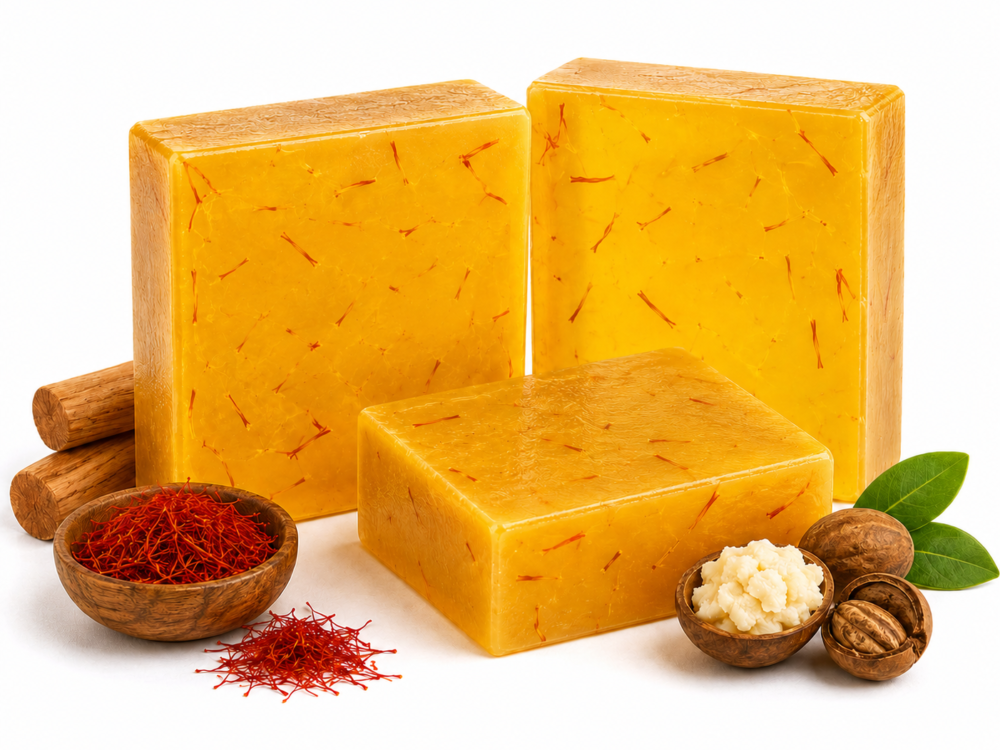
Saffron sandalwood soap is a popular herbal bathing soap that combines two traditional skincare ingredients: saffron (Kesar) and sandalwood (Chandan).
Known for its luxurious fragrance and traditional Indian skincare appeal, saffron sandalwood soap is commonly used to cleanse the skin while helping it feel soft, fresh and refreshed after bathing.
Saffron contains naturally occurring compounds such as crocin, crocetin and safranal that have attracted scientific interest for their antioxidant and other biological properties. Research reviews have explored saffron’s potential applications in cosmetic dermatology, including skin protection and pigmentation-related applications.
Sandalwood has also been traditionally used in Indian personal care and cosmetic preparations.
But what makes these two ingredients popular in soap? What are the benefits of saffron sandalwood soap, who can use it, and how should you choose one?
Let’s explore everything you need to know.
What Is Saffron Sandalwood Soap?
Saffron sandalwood soap is a bathing bar formulated with saffron and sandalwood extracts, powders, oils or fragrances, together with a soap base and other ingredients.
The exact formulation varies between manufacturers.
A quality saffron sandalwood soap may contain ingredients such as:
- Saffron extract
- Saffron threads or saffron-derived ingredients
- Sandalwood extract
- Sandalwood oil or fragrance
- Plant oils
- Shea butter
- Glycerin
- A soap base
- Other botanical extracts
For example, commercially available saffron and sandalwood soaps can contain combinations of saffron, sandalwood, glycerin, shea butter and other ingredients.
Therefore, always check the actual ingredient list rather than assuming every saffron sandalwood soap has the same formulation.
Saffron Sandalwood Soap Benefits
1. Gently Cleanses the Skin
The primary function of a soap is to cleanse.
Saffron sandalwood soap can help remove:
- Dirt
- Sweat
- Excess surface oil
- Everyday impurities
- Residue from skincare products
A good bathing bar should leave the skin feeling clean without excessive tightness or discomfort.
The cleansing performance depends largely on the complete soap formulation.
2. Leaves Skin Feeling Fresh
One of the reasons people enjoy sandalwood-based personal-care products is their distinctive, warm and traditional aroma.
A saffron sandalwood soap can make an ordinary bath feel more luxurious and refreshing.
The experience depends on the type and concentration of sandalwood and fragrance ingredients used in the product.
3. May Help Skin Look Brighter and More Radiant
Saffron is traditionally associated with brightening and complexion-enhancing skincare.
Scientific literature has investigated saffron’s potential role in cosmetic dermatology, including its antioxidant and pigmentation-related properties.
However, there is an important distinction:
Saffron sandalwood soap should not be considered a guaranteed skin-whitening product.
A rinse-off soap has relatively brief contact with the skin, so claims about dramatic or permanent complexion changes should be treated cautiously.
4. Provides Antioxidant-Rich Botanical Ingredients
Saffron contains several bioactive compounds, including crocin, crocetin and safranal.
Reviews of saffron’s dermatological applications have discussed antioxidant and other biological properties that may be relevant to cosmetic formulations.
This is one reason saffron continues to attract interest as a cosmetic ingredient.
5. Helps Skin Feel Soft and Smooth
The overall skin feel after using a saffron sandalwood soap depends on its complete formulation.
Ingredients such as glycerin, shea butter and suitable plant oils can contribute to a softer, more comfortable skin feel.
Some commercially available saffron-sandalwood soaps specifically combine these types of moisturising ingredients with saffron and sandalwood.
6. Sandalwood Adds a Traditional Skincare Element
Sandalwood has a long history in Indian beauty and personal-care traditions.
Its distinctive aroma and traditional association with cooling and soothing skincare make it a popular ingredient in soaps, creams, powders and other cosmetic products.
However, traditional use should not automatically be interpreted as proof that a sandalwood soap can treat a medical skin condition.
7. Can Be a Good Choice for a Luxury Bathing Routine
Saffron and sandalwood are both associated with premium Indian beauty traditions.
Combining them in a bathing bar can provide:
- A rich fragrance
- A traditional skincare experience
- Everyday cleansing
- A premium bathing experience
- A botanical-inspired skincare routine
This makes saffron sandalwood soap particularly attractive to people looking for a more luxurious alternative to ordinary bathing soap.
8. May Help Remove Surface Dullness
Regular cleansing removes sweat, oil and surface impurities that can make skin look dull.
A saffron sandalwood soap may therefore leave skin looking cleaner and fresher after bathing.
This should not be confused with permanent removal of pigmentation or tanning.
9. Can Complement a Simple Skincare Routine
A basic skincare routine does not need dozens of products.
For many people, the essentials are:
- A suitable cleanser
- A moisturiser
- Sunscreen during daytime
Saffron sandalwood soap can be used as the cleansing component of a simple body-care routine.
10. Suitable for People Who Prefer Traditional Indian Ingredients
For consumers interested in Indian botanical ingredients, saffron and sandalwood have strong cultural and traditional associations.
A saffron sandalwood soap offers a convenient way to incorporate those ingredients into everyday bathing.
Saffron Sandalwood Soap for Glowing Skin
Does saffron sandalwood soap make skin glow?
It can leave the skin feeling clean, smooth and refreshed, which may make it appear more radiant immediately after bathing.
Saffron has also been investigated for potential cosmetic applications involving skin appearance and pigmentation.
However, avoid expecting an instant or permanent transformation.
Healthy-looking skin depends on several factors, including:
- Genetics
- Sun exposure
- Skin hydration
- Cleansing
- Nutrition
- Sleep
- Skincare routine
A soap is only one part of that routine.
Saffron Sandalwood Soap for Oily Skin
If you have oily skin, saffron sandalwood soap may be useful as a daily cleansing product, depending on its formulation.
The goal should be to remove excess oil without stripping the skin.
If a soap leaves your face or body feeling extremely tight after washing, it may be too drying for your skin.
For oily skin:
- Avoid aggressive scrubbing.
- Don’t wash excessively.
- Use a suitable moisturiser.
- Use sunscreen during the day.
- Choose a cleanser appropriate for your skin type.
Saffron Sandalwood Soap for Dry Skin
Dry skin requires special attention because some traditional soap formulations can be more cleansing than the skin needs.
If you have dry skin, look for a saffron sandalwood soap containing ingredients designed to support a comfortable skin feel, such as glycerin, shea butter or suitable plant oils.
Some saffron-sandalwood bathing bars are specifically formulated with shea butter and glycerin for this reason.
After bathing, apply a moisturiser while the skin is still slightly damp.
Is Saffron Sandalwood Soap Good for Acne?
This is a common search query, but the answer needs to be realistic.
Saffron has demonstrated various biological activities in laboratory and research settings, and scientific reviews have explored its potential cosmetic and dermatological applications.
However, there isn’t sufficient evidence to say that ordinary saffron sandalwood soap cures acne.
Acne can involve:
- Excess sebum
- Clogged pores
- Inflammation
- Hormonal factors
- Bacterial involvement
A soap mainly provides cleansing.
If you have persistent, painful or severe acne, consult a dermatologist rather than relying on a cosmetic soap alone.
Can Saffron Sandalwood Soap Remove Dark Spots?
This is another claim that needs careful consideration.
Saffron has been researched for potential effects related to pigmentation and skin appearance, but the available evidence is not strong enough to guarantee that a saffron sandalwood soap will remove dark spots.
Dark spots can have many causes, including:
- Sun exposure
- Post-inflammatory hyperpigmentation
- Acne
- Hormonal changes
- Skin injuries
Persistent pigmentation may require targeted skincare or professional treatment.
Does Saffron Sandalwood Soap Remove Tan?
A soap can remove surface dirt and oil, making the skin look cleaner and sometimes temporarily brighter.
But removing a suntan is not the same as cleansing the skin.
Do not market saffron sandalwood soap as a guaranteed tan-removal treatment.
The most important way to reduce further tanning is effective sun protection, including sunscreen, protective clothing and limiting excessive sun exposure.
Does Saffron Sandalwood Soap Whiten Skin?
No soap should be promoted as a guaranteed skin-whitening product.
Saffron is traditionally associated with complexion-enhancing skincare, and research has explored its pigmentation-related properties.
However, a cosmetic soap should be positioned around:
- Cleansing
- Fresh-looking skin
- Smooth skin feel
- Botanical skincare
- Radiance
rather than promising permanent changes to someone’s natural skin colour.
Saffron Sandalwood Soap Ingredients
The ingredients vary significantly between brands.
A typical formulation may include:
Saffron
Also known as Kesar, saffron is derived from Crocus sativus.
Its compounds have been investigated for antioxidant and other cosmetic properties.
Sandalwood
Sandalwood is traditionally valued for its characteristic fragrance and use in Indian personal-care preparations.
Glycerin
Glycerin is commonly used in personal-care products to support skin hydration and improve skin feel.
Shea Butter
Shea butter may be included to provide a richer, more moisturising feel.
Plant Oils
Depending on the formulation, oils such as coconut, olive, castor or other vegetable oils may be used.
Soap Base
The soap base determines much of the product’s cleansing characteristics and overall feel.
Always check the manufacturer’s ingredient declaration before purchasing.
How to Use Saffron Sandalwood Soap
Using saffron sandalwood soap is straightforward.
Step 1: Wet the skin
Use clean water to wet your body.
Step 2: Create a lather
Rub the soap between wet hands or gently apply it to the skin.
Step 3: Massage gently
Spread the lather over the skin without aggressive rubbing.
Step 4: Rinse thoroughly
Wash away the soap with clean water.
Step 5: Moisturise
If your skin feels dry after bathing, apply an appropriate moisturiser.
For facial use, only use the soap on your face if the product specifically states that it is suitable for facial skin.
How Often Should You Use Saffron Sandalwood Soap?
For many people, a suitable bathing soap can be used regularly.
However, the ideal frequency depends on:
- Skin type
- Climate
- Product formulation
- Bathing habits
- Individual sensitivity
If your skin becomes dry, tight, flaky or irritated, reduce use or switch to a gentler cleanser.
More soap does not mean better skin.
Saffron Sandalwood Soap Side Effects
Saffron sandalwood soap is a cosmetic product, and individual reactions can vary.
Potential problems may include:
- Dryness
- Tightness
- Redness
- Itching
- Irritation
- Sensitivity to fragrance
- Allergic reactions to particular ingredients
Even natural ingredients can cause sensitivity in some people.
If you develop persistent irritation, stop using the product.
If you have very sensitive skin, consider performing a patch test before regular use.
Is Saffron Sandalwood Soap Safe for Daily Use?
For most people, a properly formulated bathing soap can be incorporated into a regular bathing routine.
However, there is no single formula suitable for everyone.
A mild product that leaves your skin comfortable is generally preferable to a highly stripping soap.
Always follow the manufacturer’s directions.
Who Should Use Saffron Sandalwood Soap?
Saffron sandalwood soap may appeal to people who:
- Prefer traditional Indian skincare ingredients
- Enjoy sandalwood fragrance
- Want a botanical-inspired bathing bar
- Want a luxurious bathing experience
- Prefer saffron-based skincare products
- Want a simple everyday cleansing product
People with very dry, sensitive or reactive skin should choose their soap more carefully.
Who Should Avoid or Limit It?
Consider avoiding or limiting the product if:
- You know you are allergic to one of its ingredients.
- It causes repeated irritation.
- Your skin is extremely dry.
- You have broken or inflamed skin.
- A dermatologist has advised you to use a specific cleanser.
For an existing skin disease, cosmetic soap should not replace medical treatment.
How to Choose the Best Saffron Sandalwood Soap
Not every product marketed as “saffron sandalwood soap” is the same.
Here are the most important things to check.
1. Read the ingredient list
Look beyond the front of the packaging.
Check exactly what the soap contains.
2. Check the actual saffron and sandalwood ingredients
Look for clear information about whether the product contains:
- Saffron extract
- Saffron powder
- Saffron-derived ingredients
- Sandalwood extract
- Sandalwood oil
- Sandalwood fragrance
3. Consider your skin type
A formulation suitable for oily skin may not be ideal for someone with very dry skin.
4. Look for moisturising ingredients
Glycerin, shea butter and suitable plant oils can improve the overall feel of a cleansing bar.
5. Avoid unrealistic claims
Be cautious about products promising:
- Permanent fairness
- Instant pigmentation removal
- Guaranteed acne cures
- Permanent tan removal
- Medical treatment through soap alone
6. Look for transparent product information
A trustworthy brand should provide clear information about ingredients, weight, manufacturer and usage instructions.
Saffron Sandalwood Soap vs Regular Soap
| Feature | Saffron Sandalwood Soap | Regular Soap |
|---|---|---|
| Cleansing | Yes | Yes |
| Saffron | Usually included | Usually no |
| Sandalwood | Usually included | Usually no |
| Herbal/traditional appeal | High | Depends on product |
| Fragrance | Often sandalwood-inspired | Varies |
| Skin feel | Depends on formulation | Depends on formulation |
| Suitable for daily bathing | Product dependent | Product dependent |
The most important factor is not the marketing name but the complete formulation.
Saffron Sandalwood Soap vs Saffron Soap
Both products contain saffron, but saffron sandalwood soap adds sandalwood as another key ingredient.
| Feature | Saffron Soap | Saffron Sandalwood Soap |
|---|---|---|
| Saffron | Yes | Yes |
| Sandalwood | Not necessarily | Yes |
| Traditional Indian appeal | High | Very high |
| Characteristic sandalwood aroma | No | Usually |
| Luxury bathing experience | Depends | Often positioned this way |
Saffron Sandalwood Soap vs Sandalwood Soap
A sandalwood soap focuses primarily on sandalwood-related fragrance and formulation.
A saffron sandalwood soap combines that traditional sandalwood experience with saffron.
For consumers who want both ingredients, the combination can be a convenient choice.
Frequently Asked Questions
What is saffron sandalwood soap used for?
Saffron sandalwood soap is primarily used for everyday cleansing. It is popular because of its traditional saffron and sandalwood ingredients, fragrance and luxurious bathing experience.
What are the benefits of saffron sandalwood soap?
Potential benefits include cleansing the skin, removing surface impurities, leaving skin feeling fresh and supporting a botanical-inspired skincare routine. Saffron also contains compounds that have been investigated for antioxidant and cosmetic properties.
Is saffron sandalwood soap good for skin?
It can be a good cleansing option if its formulation suits your skin type. The quality of the complete formula matters more than the presence of saffron or sandalwood alone.
Is saffron sandalwood soap good for oily skin?
It may be suitable for oily skin as a cleansing product, but the exact result depends on the formulation. Avoid products that leave your skin excessively dry or tight.
Is saffron sandalwood soap good for dry skin?
It depends on the formulation. Look for a mild product containing moisturising ingredients such as glycerin or shea butter if your skin tends to be dry.
Can saffron sandalwood soap remove dark spots?
There is not enough evidence to guarantee that a saffron sandalwood soap removes dark spots. Saffron has been studied for pigmentation-related cosmetic applications, but more research is needed.
Does saffron sandalwood soap make skin fair?
It should not be considered a skin-whitening product. It may leave skin looking cleaner and more radiant, but permanent changes to natural skin colour should not be expected.
Can saffron sandalwood soap remove tan?
It may remove surface impurities and make skin look fresher, but it should not be marketed as a guaranteed tan-removal treatment.
Can saffron sandalwood soap treat acne?
No. While saffron has some interesting laboratory and cosmetic research behind it, saffron sandalwood soap should not be considered a proven acne treatment.
Can I use saffron sandalwood soap on my face?
Only when the particular product is designed and labelled for facial use. Some bathing soaps may be too cleansing for facial skin.
Can I use saffron sandalwood soap every day?
If the product is suitable for your skin and does not cause dryness or irritation, it may be used regularly according to its directions.
Is sandalwood good for skin?
Sandalwood has a long history of traditional cosmetic use. Its suitability depends on the particular ingredient, concentration and overall product formulation.
Final Thoughts
Saffron sandalwood soap combines two traditional Indian skincare ingredients in a convenient everyday bathing bar.
Saffron is particularly interesting because its compounds have been studied for antioxidant, antimicrobial and other potential dermatological properties. Research reviews have also explored saffron in cosmetic applications involving skin appearance and pigmentation.
Sandalwood contributes its traditional skincare appeal and distinctive fragrance.
The most realistic benefits of a well-formulated saffron sandalwood soap are effective cleansing, a fresh skin feel, a pleasant bathing experience and the inclusion of traditional botanical ingredients.
It is important, however, to avoid treating this type of soap as a medical treatment or expecting guaranteed skin whitening, acne removal or permanent pigmentation correction.
For the best experience, choose a transparent formulation that matches your skin type and use a moisturiser and sunscreen as appropriate.